

Cyclone Ditwah: Anatomy of a Rare Equatorial Storm and Its Devastating Legacy
In late November 2025, the North Indian Ocean bore witness to an atmospheric anomaly. Cyclone Ditwah, defying conventional meteorological wisdom, spun to life unusually close to the equator. While its winds were modest, its legacy was carved by water and earth, triggering one of Sri Lanka's worst natural disasters in decades. This is the story of Cyclone Ditwah—a storm that underscored how profound vulnerability can stem from relentless rain, not just roaring wind.
Meteorological History: An Unusual Genesis
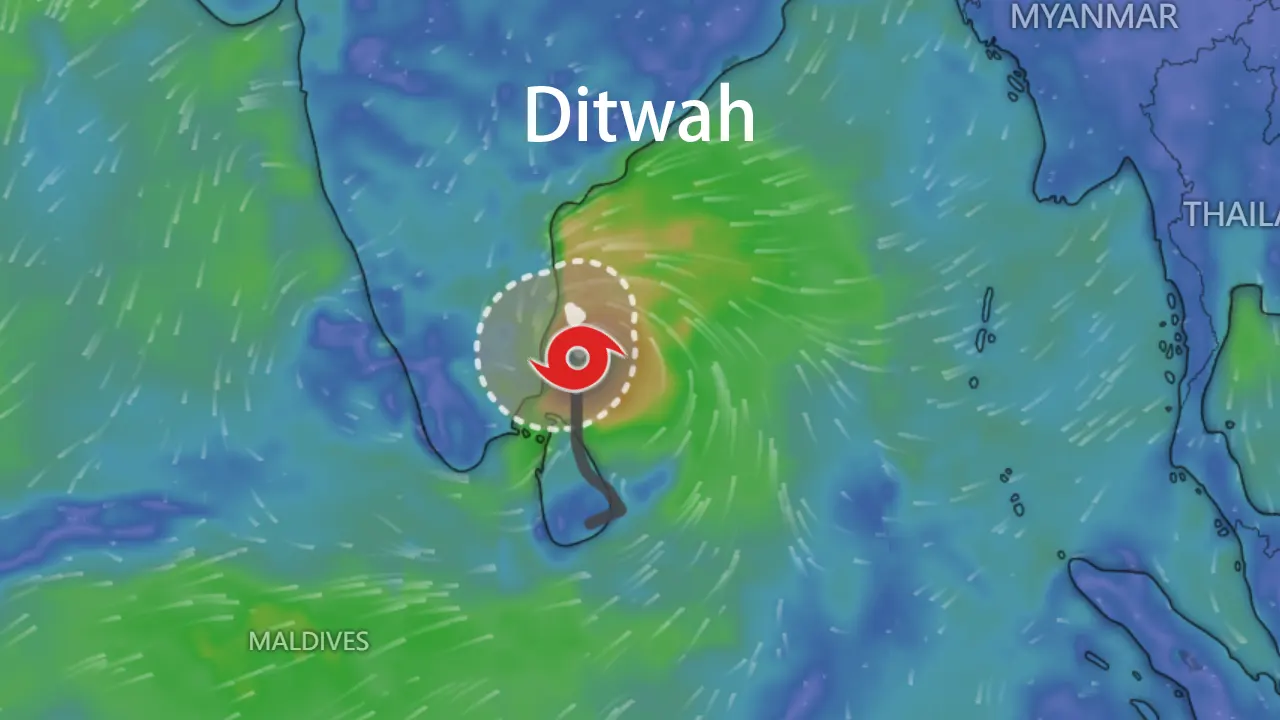
The origins of Cyclone Ditwah trace to a faint circulation noted offshore southeastern Sri Lanka on November 24, 2025. Within days, nurtured by bathtub-warm seas (28-30°C) and low wind shear, it coalesced into a depression. On November 27, it was named Ditwah. The storm's formation latitude was historically rare, akin to the famed Cyclone Agni of 2004, challenging norms due to the typically weak Coriolis force near the equator.
Cyclone Ditwah reached its peak intensity as a cyclonic storm with sustained winds of 75 km/h. Its most fateful decision was a slow, northwestward track. On November 28, Ditwah made landfall near Trincomalee on Sri Lanka's eastern coast. It then performed a agonizingly slow crawl across the island at 5-10 km/h, a pace that would amplify its deadliest weapon: torrential rainfall. After emerging into the Bay of Bengal, a weakened Ditwah eventually curved along India's Coromandel Coast before dissipating over land by December 3.
The Catastrophic Impacts of Cyclone Ditwah
The true ferocity of Cyclone Ditwah was hydrological. Its slow motion acted like a firehose, drenching landscapes for days. Rainfall totals soared between 150 mm to a catastrophic 500 mm in places. In Sri Lanka's central highlands, sodden slopes surrendered, unleashing over 100 devastating landslides that buried entire communities. Rivers like the Kelani burst their banks, flooding suburbs of the capital, Colombo.
Sri Lanka: A Nation Submerged
For Sri Lanka, Cyclone Ditwah was a historic catastrophe. The official death toll surpassed 460, with hundreds more missing, marking it as the deadliest cyclone to hit the island since 1978. The numbers, however, fail to capture the scale of human suffering:
- Human Toll: Over 1.46 million people were affected. More than 233,000 were displaced, seeking refuge in over 1,400 emergency shelters.
- Physical Destruction: The storm destroyed or damaged tens of thousands of homes. Critical infrastructure—roads, bridges, and power lines—was severed, leaving a third of the country in the dark.
- Economic Shock: Preliminary assessments pointed to economic losses potentially in the tens of billions of USD, with agriculture, a livelihood for millions, lying in ruins under floodwaters.
The narrative of Cyclone Ditwah in Sri Lanka is one of communities overwhelmed not by wind, but by cascading mud and rising water. Survivors spoke of narrow escapes, like Nawaz Nashra who fled with his family as the earth gave way.
India: A Glancing Blow
As Cyclone Ditwah approached the Indian coast, it had weakened significantly. India's extensive preparations, including evacuations and flight cancellations in Tamil Nadu, mitigated a larger disaster. The impacts were primarily limited to heavy rains, localized flooding, and minor incidents, resulting in three reported fatalities. The trajectory of Ditwah ultimately spared India the catastrophic rainfall that crippled its island neighbor.
Aftermath and the Long Road to Recovery
In the wake of Cyclone Ditwah, Sri Lanka declared a state of emergency. A massive humanitarian operation unfolded, involving over 25,000 military personnel for search, rescue, and aid distribution. The international community rallied, with India launching "Operation Sagar Bandhu" and nations from the US to China pledging financial aid. Tech initiatives, like Starlink providing free connectivity, became lifelines for communication.
Yet, recovery poses a Herculean challenge. Beyond rebuilding shattered infrastructure, communities face trauma, waterborne disease risks, and severe economic strain from crippled harvests and tourism. The disaster has ignited urgent debates about land-use planning in landslide-prone areas, early warning systems, and the stark realities of climate change for vulnerable island nations.
Conclusion: A Storm of Lessons
Cyclone Ditwah will be remembered not for its wind speed, but for the devastating floods and landslides it unleashed. It highlighted a critical shift in disaster preparedness: for regions with complex topography, rainfall forecasting and hydrological risk management can be as crucial as tracking a storm's eye. The formation of Ditwah in an unusual equatorial zone also adds to the growing body of evidence on how warming oceans may be altering traditional cyclone patterns.
The legacy of Cyclone Ditwah is a sobering reminder of nature's power and societal vulnerability. As recovery continues, the lessons learned from this event must inform a more resilient future for all nations in the path of such evolving storms.