
Typhoon Fung-wong (Phoenix) 2025: A Catastrophic Force of Nature
In the annals of Pacific typhoon history, Typhoon Fung-wong stands out as a formidable late-season storm that carved a path of destruction across Southeast Asia in November 2025. Also known as Typhoon Phoenix in Chinese meteorological circles, this system exemplified the raw power and unpredictability of tropical cyclones, evolving from a tropical disturbance into a super typhoon with winds rivaling Category 4 hurricanes. As the 26th named storm of the active 2025 Pacific typhoon season, Typhoon Fung-wong demonstrated how rapid intensification and complex atmospheric interactions can lead to widespread devastation, particularly in the Philippines and Taiwan. This retrospective delves into the life cycle of Typhoon Fung-wong, exploring its meteorological journey, societal impacts, and the lessons it imparts for future disaster preparedness.
Formation and Rapid Intensification
Typhoon Fung-wong originated from a tropical disturbance southwest of the Micronesian Islands in early November 2025. By November 3, it had developed into a tropical depression, with agencies like the Japan Meteorological Agency (JMA) and Joint Typhoon Warning Center (JTWC) closely monitoring its progression. Favorable conditions, including warm sea surface temperatures and low wind shear, fueled its rapid organization. On November 6, the system was named Fung-wong—meaning "Phoenix"—as it reached tropical storm status, symbolizing its rebirth into a powerful entity.
Within days, Typhoon Fung-wong underwent explosive intensification, becoming a typhoon by November 8 and peaking as a super typhoon on November 9. JTWC estimates indicated sustained 1-minute winds of 215 km/h, while JMA reported 10-minute winds of 155 km/h and a central pressure of 950 hPa. This phase highlighted the storm's ferocity, with satellite imagery revealing a well-defined eye surrounded by intense convection. The transformation of Typhoon Fung-wong into a super typhoon underscored the role of oceanic heat in fueling such systems, a point of discussion in climate change dialogues.
Path and Landfalls: A Trail of Destruction
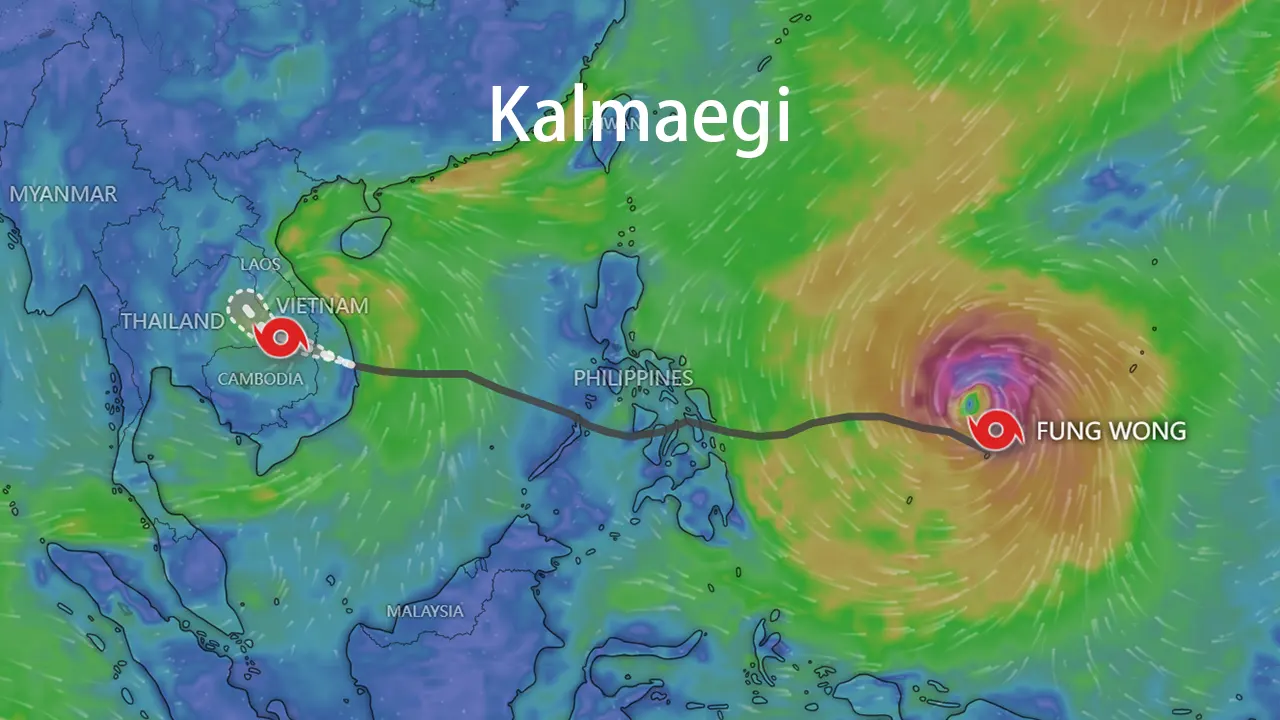
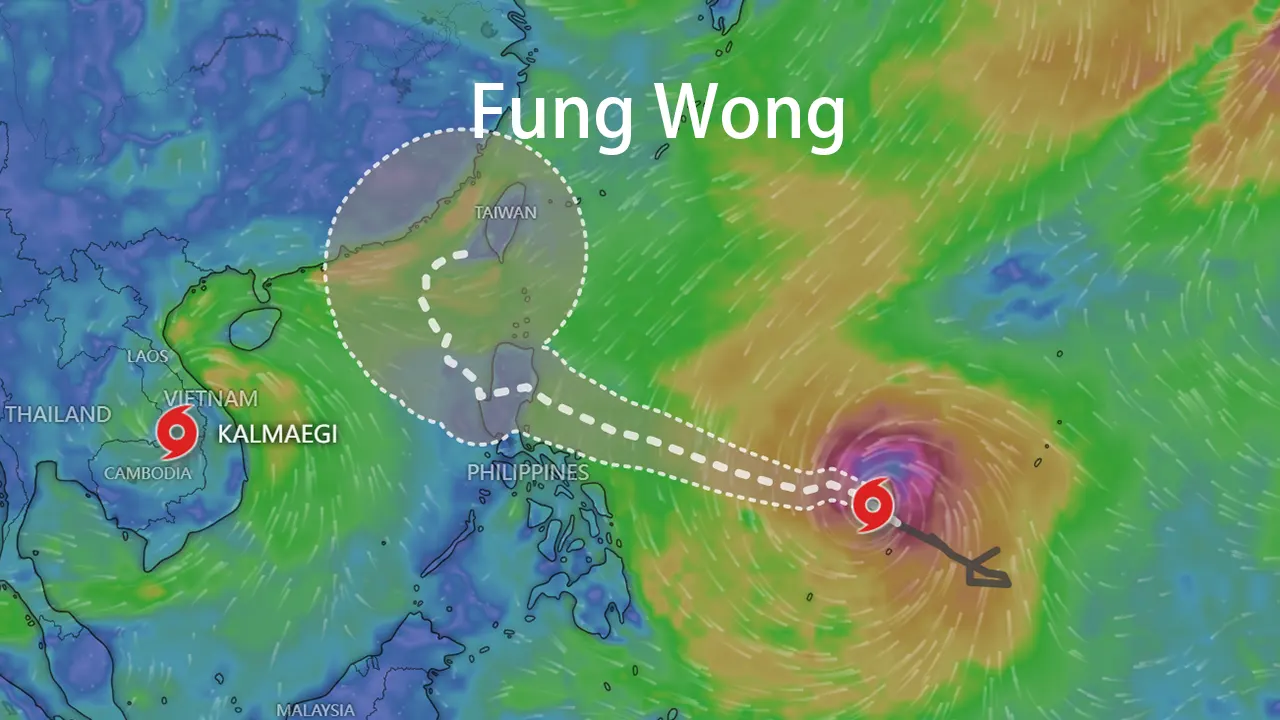
The trajectory of Typhoon Fung-wong was influenced by a subtropical ridge, guiding it west-northwestward toward the Philippines. On the evening of November 9, it made its first landfall in Dinalungan, Aurora Province, Philippines, as a powerful typhoon. The impact was immediate and severe, with storm surges and violent winds battering the coast. After crossing Luzon, Typhoon Fung-wong weakened due to terrain interaction but maintained enough strength to threaten Taiwan.
By November 12, the storm made a second landfall near Hengchun Township, Pingtung County, Taiwan, though it had diminished to a tropical storm by then. This marked Taiwan's first November typhoon landfall in 58 years, adding to the historical significance of Typhoon Fung-wong. The storm eventually transitioned into an extratropical cyclone by November 13, dissipating over the Pacific. The path of Typhoon Fung-wong illustrated the unpredictability of late-season storms, often affected by shifting pressure systems.
Impacts and Human Toll
The legacy of Typhoon Fung-wong is etched in the devastation it left across multiple regions. In the Philippines, where it struck as a super typhoon, the effects were catastrophic. Flooding, landslides, and power outages plagued Luzon, resulting in at least 28 fatalities, 52 injuries, and 2 missing persons. Over 1.1 million people were evacuated, and infrastructure suffered immensely, with 7,320 homes destroyed and hundreds of roads rendered impassable. The Philippines was already reeling from Typhoon Seagull, and Typhoon Fung-wong exacerbated the crisis, prompting a national disaster declaration.
In Taiwan, the impact of Typhoon Fung-wong shifted to torrential rainfall, causing record-breaking floods—up to 1,062 mm in Nanao—and injuring 95 people, with one death reported. Agricultural losses soared to approximately $3.8 million USD, highlighting the economic strain. Meanwhile, mainland China, Hong Kong, and Macau experienced minor effects, such as strong winds and transport disruptions, but no major casualties. Overall, Typhoon Fung-wong caused an estimated $9 million in damages, emphasizing the localized yet severe nature of its wrath.
Meteorological Characteristics and Forecasting Challenges
Typhoon Fung-wong presented a complex case for meteorologists, with its peak intensity varying between agencies due to different measurement standards. JTWC classified it as a super typhoon with 215 km/h winds, while JMA termed it a severe typhoon. The storm's large size, with a diameter reaching 1,800 km, amplified its rainfall and wind fields, leading to widespread flooding. However, Typhoon Fung-wong also highlighted forecasting hurdles, as its rapid weakening after Philippine landfall was underestimated, complicating warnings for Taiwan.
This event sparks conversations about the role of climate change in intensifying storms like Typhoon Fung-wong. Warmer oceans may contribute to such rapid intensification, though scientific consensus on individual events remains cautious. The journey of Typhoon Fung-wong serves as a reminder of the need for advanced modeling to predict intensity changes, especially in terrain-influenced scenarios.
Response and Recovery Efforts
In the wake of Typhoon Fung-wong, coordinated response efforts were launched across affected areas. The Philippines implemented Signal No. 5 alerts, facilitating mass evacuations and aid distribution by organizations like World Vision. Taiwan issued marine and land warnings, suspending schools and transport to mitigate risks. These measures, though lifesaving, revealed gaps in infrastructure resilience, particularly in the Philippines' housing and road networks. Recovery from Typhoon Fung-wong is ongoing, with calls for enhanced building codes and international support to bolster disaster preparedness.
Lessons Learned and Future Preparedness
Typhoon Fung-wong of 2025 leaves a poignant lesson on the importance of adaptive disaster management. Its evolution from a tropical disturbance to a super typhoon underscores the volatility of nature, while its impacts stress the need for community resilience. As climate patterns evolve, storms like Typhoon Fung-wong may become more frequent, urging policymakers to invest in early warning systems and sustainable infrastructure. By studying Typhoon Fung-wong, we can forge a path toward a safer future in typhoon-prone regions.
In summary, Typhoon Fung-wong was not just a weather event; it was a testament to the forces that shape our world. Its story, from formation to dissipation, invites reflection on our vulnerability and resilience in the face of nature's might.